
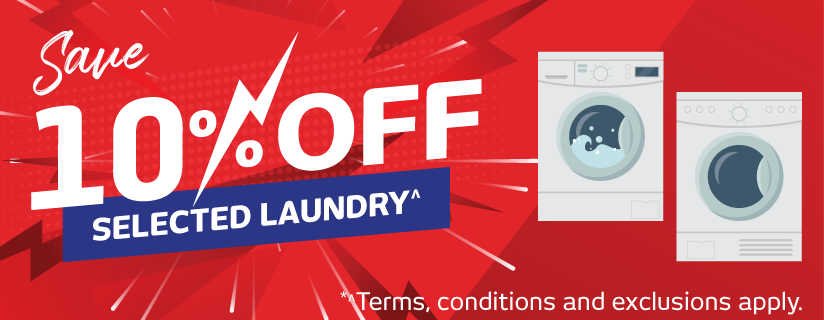
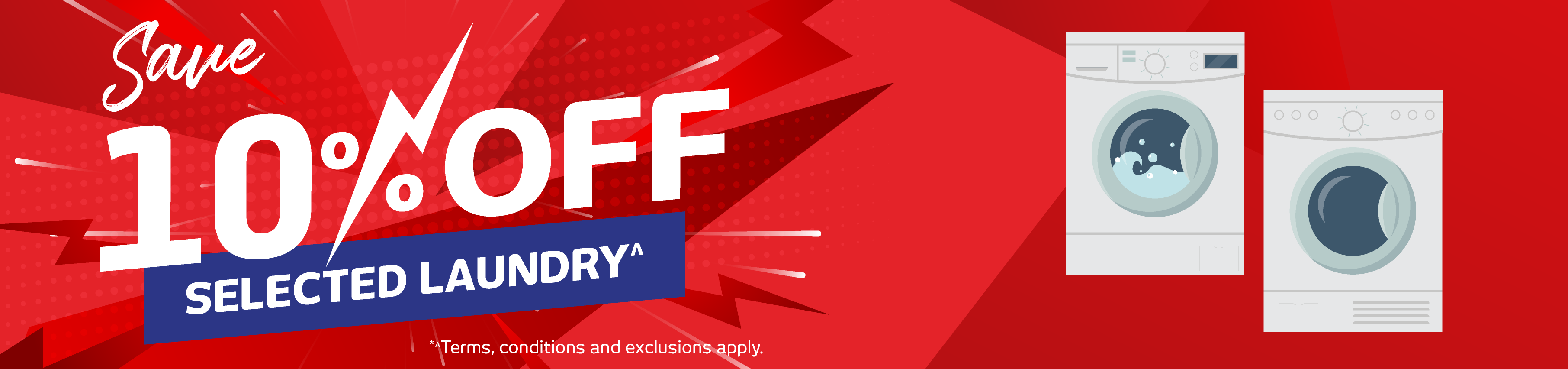
For four days only, save 10%^ on selected laundry appliances, online and in-store at Retravision. Plus, RAC members save 5%* every day!
Hurry, sale ends Sunday 22nd March 2026.
^*Terms, conditions and exclusions apply, click here for details.
FAQs
To find the right dryer for your needs, consider the following factors:
• Measure the space where you plan to install the dryer to ensure it fits comfortably. Decide if you need a vented or condenser dryer based on your space and installation options.
• Look for dryers with energy-efficient features if you want to save on utility bills and reduce your environmental impact. Heat pump dryers and energy-efficient models can be a good investment in the long run.
• Choose a dryer with a capacity that matches your laundry load needs. Larger capacities are ideal for families or households with heavy laundry loads, while smaller capacities may be sufficient for individuals or couples.
• Consider the features you need, such as steam cycles, sensor drying, or smart technology for remote control. Advanced features can enhance convenience and improve drying performance.
• Determine your budget, including the upfront cost and long-term operating expenses. Higher-priced models may offer more features and better energy efficiency but weigh these against your budget constraints.
Washing machines come in various types, each offering distinct features and advantages to suit different household needs. The primary difference lies in their loading style, front loading machines are known for their energy and water efficiency, using a horizontal drum and tumbling action to clean clothes gently. They are ideal for homes with limited space, as they can be stacked with dryers.
Top-loading machines, on the other hand, have a vertical drum and are generally easier to load and unload. They often have shorter cycle times and allow users to add items mid-cycle, making them convenient for quick laundry tasks.
Another key difference is between standard and high-efficiency (HE) models. Standard machines typically use more water and energy per load, making them suitable for large loads with heavy fabrics. In contrast, high-efficiency models consume less water and energy by relying on tumbling and spinning, and they require specific HE detergents to prevent excessive suds.
When searching for a top-rated washing machine, several brands consistently stand out for their performance, durability, and innovative features.
LG is renowned for its front load washers with features like TurboWash technology, which reduces washing time without compromising cleaning performance. Their machines often have high energy efficiency ratings and come with smart technology integration, allowing remote control and diagnostics via smartphone apps.
Samsung offers a range of both front and top loading machines. They are well-known for their AddWash door feature, allowing you to add forgotten items mid-cycle. Samsung machines also tend to have advanced features such as steam cleaning and Wi-Fi connectivity for smart home integration.
Bosch is famous for its quiet and efficient front load machines, often featuring EcoSilence Drive motors and VarioPerfect technology, allowing users to choose between faster wash times or more energy-efficient cycles.
Ultimately, the best washing machine for you will depend on your specific needs, such as budget, space constraints, and desired features. Reading recent consumer reviews and expert evaluations can provide additional insights into the best options available.
The latest dryers come equipped with a range of advanced features designed to enhance convenience, efficiency, and performance. Some of the notable features include:
• Wi-Fi connectivity allows you to control and monitor your dryer remotely via smartphone apps. You can start, stop, or schedule cycles and receive notifications about cycle completion.
• Steam functions help reduce wrinkles and refresh clothes, eliminating the need for additional ironing and helping to sanitise garments.
• Moisture sensors to automatically adjust drying times based on the moisture level of the clothes, preventing over-drying and saving energy.
Heat pump dryers are highly energy-efficient, using a closed-loop system to recycle air and minimise energy consumption.
• Some dryers come with multi-sensory alerts that provide visual and audible signals to inform you when the cycle is complete or when maintenance is needed.
Advanced models offer a variety of customisable drying cycles tailored to specific fabric types and drying needs, such as delicate, heavy-duty, or eco-friendly cycles.
Get the know the full range of features in our handy Dryer Buying Guide.
The energy rating on washing machines is a measure of their energy consumption and efficiency, indicating how much electricity the appliance uses relative to its capacity and performance. These ratings are usually represented on a scale, such as the European A+++ to D system, with A+++ being the most efficient and D being the least. The energy rating helps consumers identify models that minimise energy consumption, reduce utility bills, and have a smaller environmental impact.
Several factors contribute to a washing machine's efficiency, including water consumption, spin speed, and load-sensing technology. Efficient machines use less water per cycle, which reduces the energy required to heat the water. Machines with higher spin speeds can extract more water from clothes, decreasing drying time and energy usage. Load-sensing technology allows the machine to automatically adjust water levels and cycle times based on the load size, ensuring minimal resource usage.
Generally, front loading machines are more energy-efficient than top loading models due to their design and reduced water usage. High-efficiency (HE) models are specifically designed to use less water and energy while still achieving excellent cleaning performance with HE detergents.
A smart washing machine is an advanced appliance that incorporates modern technology to enhance convenience, efficiency, and control in the laundry process. These machines are equipped with Wi-Fi connectivity, allowing users to control and monitor their washing machine remotely via smartphone apps. This connectivity enables users to start, pause, and stop wash cycles, receive notifications about cycle completion, and troubleshoot issues through the app, often without the need for professional assistance.
Smart washing machines often feature innovative technology, such as load-sensing capabilities that automatically adjust water levels and wash settings based on the size and type of load. They may also offer customised wash cycles tailored to specific fabric types or stains, providing optimal cleaning performance for various laundry needs.
Some smart machines come with voice control compatibility, allowing users to operate the machine using voice commands through virtual assistants like Amazon Alexa or Google Assistant.
Regular cleaning of your washing machine is essential to maintain its efficiency and hygiene. Here are detailed steps to keep your washer in top condition:
Front-loading Machines
Wipe down the rubber door seal with a damp cloth to remove mould, mildew, and detergent residue. Use a mixture of water and vinegar or a dedicated washing machine cleaner for stubborn buildup.
Most machines have a self-cleaning cycle; use this at least once a month. Add a washing machine cleaner, or use a mixture of white vinegar and baking soda to remove odours and residue. Remove the drawer and rinse it under warm water. Use a brush to remove detergent buildup, then dry thoroughly before reinserting.
Top-loading Machines
Fill the machine with hot water and add a cup of white vinegar and half a cup of baking soda. Allow the cycle to start, then pause it to let the mixture soak for about an hour before completing the cycle. After the cycle, use a sponge or cloth to wipe down the inside of the drum, paying special attention to any areas with visible residue.
• Leave the door or lid open after each use to allow the interior to dry, preventing mould and mildew growth.
• Regularly check and clean the filter (if your machine has one) to ensure efficient drainage.
• Inspect and clean the water inlet filters to maintain water flow and prevent clogs.
The size of the washing machine you need depends on your household's laundry habits, the number of people in your household, and the types of items you regularly wash. Washing machine capacity is typically measured in cubic feet or kilograms, indicating the maximum weight of dry laundry the machine can handle in a single load.
For small households or individuals, a washing machine with a capacity of 3 to 4 cubic feet (or around 6 to 8 kilograms) is usually sufficient. This size can accommodate regular loads of laundry, including clothes, towels, and small bedding items. For larger families or households with high laundry demands, a machine with a capacity of 4.5 to 6 cubic feet (or around 9 to 12 kilograms) is recommended. This size allows for washing larger loads, such as bedding, heavy fabrics, and bulkier items, reducing the number of cycles needed each week.
Consider the available space in your home when choosing the washing machine size. Measure the area where the machine will be placed to ensure it fits comfortably, allowing for clearance around the machine for ventilation and maintenance. If space is limited, consider a stackable front-load washer and dryer combination, which can maximise available space without sacrificing capacity.
When selecting a dryer, you have several options based on your needs and preferences. Vented dryers expel moist air from the drum to the outside through a duct. They are generally less expensive and can dry clothes quickly. However, they require proper ventilation and can be less efficient in terms of energy use.
Condenser dryers work by condensing the moisture from the clothes into water, which is then collected in a reservoir or drained away. These dryers are more flexible with installation since they don't need external venting, but they may have higher upfront costs and take longer to dry clothes compared to vented models.
Heat pump dryers are another option that uses a heat pump to dry clothes efficiently by recycling hot air. They are highly energy-efficient and environmentally friendly but come with a higher price tag.
Choosing the right type of washing machine involves considering several key factors based on your specific needs and preferences.
Loading Style
Front-loading machines are often praised for their energy efficiency and superior cleaning performance. They use less water and detergent than top loaders and are generally gentler on clothes. However, they can be more expensive upfront and require bending down to load and unload, although pedestal options are available to alleviate this issue.
Top-loading machines are generally less expensive and easier to load, especially for people who prefer not to bend down. They typically have faster cycle times and allow you to add forgotten items mid-cycle (unless you choose a front loader with an AddWash feature). However, they usually use more water and energy compared to front loaders.
Consider the size of your household and the amount of laundry you typically do. Larger families may benefit from a machine with a larger drum capacity to handle bigger loads, reducing the number of cycles needed each week. Measure your available space to ensure the machine fits comfortably, especially if you're considering a larger-capacity model. Front-loading machines can often be stacked with a dryer to save space, while top loaders generally require more vertical space.
Look for features that match your lifestyle, such as quick wash cycles for faster laundry completion or steam options for wrinkle reduction and sanitation. Smart technology integration allows for remote monitoring and control, diagnostics, and updates, which can be beneficial for tech-savvy users. Determine how much you are willing to spend, considering both the initial purchase price and the potential long-term savings on energy and water bills with more efficient models.



Customer Service
Shopping Information
Tips & Advice
About Retravision
© Retravision 2026


